
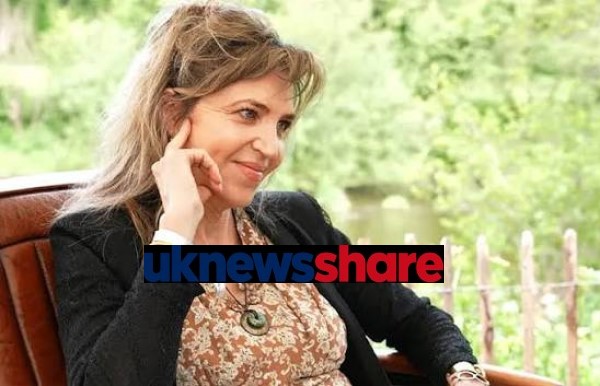
Who Is Martha Fiennes?
Martha Fiennes is a British film director, screenwriter and producer recognised for her work in cinema and her interest in combining traditional filmmaking with innovative visual techniques. As a member of the distinguished Fiennes family, she has connections to some of Britain’s most recognisable acting talent. However, her own career has developed through a commitment to directing, storytelling and creative experimentation.
The name Martha Fiennes is particularly associated with films such as Onegin and Chromophobia. Her work demonstrates an interest in complex characters, emotional relationships and the social environments that influence people’s decisions. Rather than relying solely on conventional storytelling, she has explored ways to bring literature, visual art and contemporary technology together on screen.
Although public attention often focuses on her famous relatives, Martha has established an artistic identity of her own. Her career reflects a willingness to pursue ambitious projects and explore different approaches to filmmaking.
Martha Fiennes’ Early Life and Family Background
Martha Fiennes was born on 5 February 1964 in Suffolk, England. She grew up in a creative family environment that helped shape her appreciation of the arts, literature and performance.
Her parents were Mark Fiennes, a photographer and illustrator, and Jennifer Lash, a writer. Both parents had artistic interests, creating a household in which creative expression played an important role. This background provided a natural foundation for Martha’s later interest in film and storytelling.
The Fiennes family is widely known for its contributions to the arts. Martha’s siblings include actors Ralph Fiennes and Joseph Fiennes, as well as other family members who have pursued creative careers. Growing up among people with artistic interests helped establish a connection to the cultural world, although her professional achievements have come through her own work.
Her early experiences contributed to an understanding of how images, stories and human emotions can work together. These elements later became important characteristics of her filmmaking style.
Martha Fiennes’ Education and Interest in Film
Martha Fiennes developed her interest in creative expression through her upbringing and subsequent professional experiences. Details of her formal education are not extensively documented in widely available public biographies, so it is important not to assume qualifications or training that have not been reliably established.
Her career demonstrates a practical understanding of film production, visual composition and narrative development. Directing requires a combination of creative judgement and organisational skill, from interpreting a script to guiding performers and collaborating with cinematographers, editors and designers.
Fiennes’ subsequent projects show that she is interested in more than simply presenting a story. She also explores how the atmosphere, appearance and structure of a film influence the audience’s experience.
This approach has helped distinguish her work from projects that follow more conventional commercial formulas.
Martha Fiennes’ Career as a Film Director
Martha Fiennes built her reputation by working on projects that combine literary influence, thoughtful characterisation and visual creativity. Her career has included directing, writing and producing, giving her the opportunity to contribute to different stages of the filmmaking process.
Her best-known films reveal an interest in examining relationships, social expectations and the tensions between private emotions and public behaviour.
Onegin: A Major Milestone in Her Career
One of the most significant achievements in Martha Fiennes’ career was directing Onegin, released in 1999. The romantic drama was adapted from Alexander Pushkin’s celebrated verse novel Eugene Onegin.
The film stars Ralph Fiennes as the title character, with Liv Tyler playing Tatiana. It follows a sophisticated but emotionally distant man whose decisions affect his relationships with the people around him.
Adapting a classic literary work for the cinema presents considerable challenges. Directors must preserve the original material’s emotional depth while making it accessible to modern audiences. Fiennes approached the story through restrained performances, atmospheric cinematography and an emphasis on the characters’ inner conflicts.
The film received recognition for its artistic qualities, and Martha Fiennes won the BAFTA Award for Outstanding Debut by a British Writer, Director or Producer in 2000. This achievement established an important milestone in her professional life.
Onegin remains a defining project because it demonstrates her ability to translate literature into a visually expressive cinematic experience.
Chromophobia: Exploring Modern Society
Another notable film directed by Martha Fiennes is Chromophobia, released in 2005. The film explores contemporary society through interconnected characters whose lives are shaped by ambition, privilege, insecurity and personal dissatisfaction.
Featuring a cast that includes Penélope Cruz, Ralph Fiennes, Kristin Scott Thomas and Ian Holm, the film examines the pressures that influence relationships and individual choices.
The title refers to an aversion to colour, providing a symbolic starting point for a story concerned with emotional distance and the difficulties of modern life. The narrative explores how people can become trapped by social expectations, material ambitions and the desire to maintain appearances.
Rather than focusing on a single protagonist, Chromophobia brings together different perspectives. This structure allows the film to examine how personal struggles intersect with broader social issues.
The project also reflects Fiennes’ interest in the relationship between visual design and storytelling. Its distinctive presentation supports the themes running throughout the narrative.
Martha Fiennes and Digital Filmmaking
Martha Fiennes has also explored the possibilities of combining cinema with emerging technology. One of the most interesting examples of this interest is The Perpetual Motion Machine, an interactive digital artwork associated with her experimentation with virtual imagery and computer-generated environments.
Her work in this area demonstrates an interest in expanding the relationship between audiences and moving images. Traditional cinema usually presents a fixed sequence of scenes, whereas interactive digital experiences can offer alternative ways of exploring characters, environments and narrative elements.
For Fiennes, technological innovation provides an opportunity to reconsider how stories can be communicated. Digital filmmaking and interactive art can create experiences that extend beyond conventional screen-based storytelling.
This experimentation is significant because the film industry continues to evolve through advances in computer graphics, virtual production and interactive media. Directors who explore these possibilities can contribute to new conversations about the future of visual entertainment.
Although her digital projects have attracted less mainstream attention than her feature films, they reveal another dimension of her creative interests.
Martha Fiennes’ Husband and Personal Life
Martha Fiennes has generally maintained a relatively private personal life. Unlike some members of her family who regularly appear in the public eye, she has tended to keep attention focused on her professional work.
She has been associated with photographer and filmmaker George Tiffin, with whom she has children. Public sources have not always provided consistent details about the status and timeline of their relationship, so claims about their current marital arrangements should be treated cautiously.
Her children include Hero Fiennes Tiffin, who has developed an acting career of his own. Hero is particularly recognised for playing Hardin Scott in the After film series. His career has brought further public attention to the family’s artistic connections.
Martha’s experience as a parent exists alongside her work in film and creative production. However, she has not made every aspect of her family life public, and respecting those boundaries is important when discussing her biography.
Martha Fiennes and Her Famous Siblings
The Fiennes family has made a substantial contribution to British film and theatre, with several members achieving international recognition.
Ralph Fiennes
Ralph Fiennes is an acclaimed actor and director known for films such as Schindler’s List, The English Patient and the Harry Potter series, in which he portrayed Lord Voldemort.
His collaboration with Martha on Onegin brought their respective talents together in a literary adaptation. While their professional paths differ, both have demonstrated an interest in complex characters and challenging material.
Joseph Fiennes
Joseph Fiennes is another successful actor in the family. He has appeared in productions including Shakespeare in Love and the television series The Handmaid’s Tale.
His career illustrates the family’s broad involvement in screen performance. Martha, however, has concentrated primarily on directing, writing and creative production rather than building a public profile as an actor.
These family connections are an important part of Martha Fiennes’ background, but her own directing achievements should be considered on their individual merits.
Martha Fiennes’ Directing Style and Creative Vision
Martha Fiennes’ filmmaking is characterised by an interest in psychological complexity, carefully constructed visuals and the relationship between individuals and society.
Her films often examine characters whose outward confidence conceals uncertainty, regret or emotional conflict. These themes create opportunities for subtle performances and layered storytelling.
Another feature of her approach is her willingness to work with established literary material while exploring contemporary concerns. Onegin demonstrates how a classic text can be adapted for cinema, while Chromophobia examines social pressures through a modern ensemble narrative.
Her interest in digital art further suggests that she does not regard filmmaking as a medium with fixed boundaries. Instead, she has explored how emerging technology might provide additional ways to communicate ideas.
Although her filmography is relatively selective, her projects demonstrate a commitment to distinctive creative choices rather than simply producing a large number of commercial releases.
Martha Fiennes’ Net Worth and Professional Earnings
Martha Fiennes’ exact net worth has not been reliably established through authoritative public financial disclosures. As a result, specific online estimates should not be treated as confirmed figures.
Her professional earnings may come from directing, screenwriting, producing and other creative projects. However, the income associated with filmmaking varies considerably depending on production budgets, contractual arrangements, distribution agreements and the commercial performance of individual projects.
It is also important to distinguish Martha’s finances from those of her famous siblings. Although the Fiennes family includes internationally successful performers, their earnings and assets are separate.
Without verified financial information, assigning Martha Fiennes a precise net worth would be speculative. Her recognised professional achievements provide a more reliable basis for assessing her career than unsupported monetary estimates.
Martha Fiennes’ Legacy and Influence
Martha Fiennes occupies an interesting position in British cinema as a filmmaker who has worked across literary adaptation, contemporary drama and digital experimentation.
Her achievement with Onegin remains particularly important because it brought critical recognition early in her directing career. The film demonstrated her ability to handle a demanding literary source and translate its emotional themes into a cinematic form.
With Chromophobia, she turned towards contemporary social relationships and the pressures associated with status, ambition and personal identity. Her digital work has also shown an openness to exploring how technology can change the way audiences experience visual storytelling.
Her career offers an example of how a filmmaker can pursue a distinctive artistic direction while working within an industry often shaped by commercial expectations.
Conclusion
Martha Fiennes is a British director, screenwriter and producer whose career reflects a lasting interest in literature, human relationships and visual innovation. From the award-winning success of Onegin to the socially observant drama of Chromophobia and her experiments with digital art, she has explored several different approaches to storytelling.
Although her connections to Ralph Fiennes, Joseph Fiennes and the wider Fiennes family attract public interest, her professional identity extends beyond those relationships. Her work demonstrates creative ambition, a thoughtful approach to character development and a willingness to explore new artistic possibilities.
For anyone researching Martha Fiennes, her biography provides an insight into a filmmaker who has combined literary adaptation with contemporary themes and technological experimentation. Her contribution to British cinema lies not simply in her family background, but in the distinctive projects she has brought to the screen.
